
 At university my tutor was Richard
Grimsdale, who built the first ever transistorised computer.
Grimsdale's tutor was Alan Turing (making me a grand-tutee of Turing).
 I
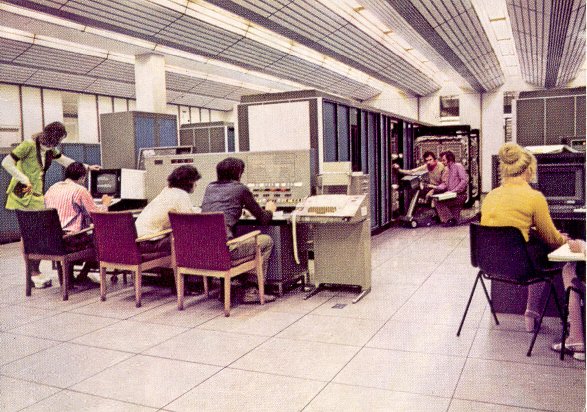
(coincidentally) went on to work in the department in Manchester where Turing
worked on the 5th computer in the line of computers Turing also worked on, the
MU5.
 Moving to The Netherlands, I co-designed the programming language that Python
is based on.
I wrote part of GCC
 I was the first user of the open
internet in Europe, in November 1988.
 I organised workshops at the first Web
conference at CERN in 1994
I was chair of the HTML, XHTML, and XForms Working groups at W3C.
I co-designed HTML, CSS, XHTML, XForms, RDFa, and several others.
I still chair XForms and ixml.

Tim Berners-Lee and Steven discussing HTML
The world wide web consortium was created to protect the web from avaricious companies who wanted to own the web.
Mosaic (later Netscape) was the most-used browser. Microsoft wanted in on the action.
Both companies started adding things, badly, to HTML.
Google, through a trick, managed to extract HTML from W3C, and are now in control.
Most browsers, even Microsoft's!, are now just a rebranding of Google Chrome.
By giving the design of HTML to programmers, they have changed it from a document format to a programming environment.
And HTML has become huge!

One of the advantages of the web is that you can read its specification without
having to print it out


Without going into detail about why Javascript is such a bad language, let's look at the consequences of replacing a declarative approach with programming.
One of the problems with using programming for functionality is that standardisation disappears.
Example: CSS presentation mode (which I am using here) allows you to specify how any document can be formatted when doing a presentation.
Alas, HTML5 has taken the approach that you can do this better in Javascript. No one supports Presentation Mode any more. And there are now lots of Javascript packages to do presentation.
ALL DIFFERENT!
You can no longer switch in a different presentation package, and use that, because you have to CHANGE THE DOCUMENT.
The programmers are doing the document design, so all the documents become proprietary, and there is no interoperability, which is the whole point of standards.
Javascript is why there are so few new elements in HTML5: they haven't done any design, and instead said "if you need anything new, you can always add it with Javascript".
And many have.
Wikipedia lists 31 packages of Javascript (such as Angular, Dojo, React, and Bootstrap) called frameworks that you can use to build your webpages.
They are not interchangable, thus effectively creating 31 different versions of HTML.
So which framework do you use? And what happens when:
YOU HAVE TO CHANGE ALL YOUR DOCUMENTS.
This is why standards are needed, not proprietary formats like frameworks.
"The U.K.’s GDS (Government Digital Service) ran an experiment to determine how many of its users did not receive JavaScript-based enhancements, and it discovered that number to be 1.1 percent, or 1 in every 93 users. For an ecommerce site like Amazon, that’s 1.75 million people a month, which is a huge number." -- alistapart
To look at the webpage of one single tweet of 140 characters, you have to download just under a megabyte. It's 5200 lines of HTML before you even get to the five Javascript packages.
The whole of James Joyce's Ulysses is only half as long again.
"An article from 2012 titled "The Growing Epidemic of Page Bloat" warns that the average web page is over a megabyte in size.
The article itself is 1.8 megabytes long.
An article two years later, called “The Overweight Web" warns that average page size is approaching 2 megabytes.
That article is 3 megabytes long.
If present trends continue, there is the real chance that articles warning about page bloat could exceed 5 megabytes by 2020." -- The Website Obesity Crisis
"Because of #GDPR, USA Today decided to run a separate version of their website for EU users, which has all the tracking scripts and ads removed. The site seemed very fast, so I did a performance audit. How fast the internet could be without all the junk!
5.2MB → 500KB
They went from a load time of more than 45 seconds to 3 seconds, from 124 (!) JavaScript files to 0, and from a total of more than 500 requests to 34." -- Marcel Freinbichler
Adding another programming layer on top of the browser itself opens yet another gateway to malware:
One day we will all be 80, and still need to be able to use the web.
"Many developers who have grown up only using frameworks have a total lack of understanding about the fundamentals of HTML, such as valid and semantic markup ... This is of great concern as semantic markup is one of the core principles of an accessible web." -- Russ Weakley
The web is the way now that we distribute information. We will need the web pages we create now to be readable in 100 years time, just as we can still read 100-year-old books.
Requiring a webpage to depend on a particular 100-year-old implementation of Javascript and the 100-year-old framework it uses is not exactly evidence of future-thinking.
And now Google has announced it will no longer support parts of the Web technologies (declarative parts).
My website has 6136 web pages. Google's change breaks 3501 of them, nearly 60%...
Declarative markup is easier to keep alive because it is independent of the implementation!
The Web has become too important as infrastructure to be treated lightly, and left to one company.
The Web itself must return to declarative foundations to make it durable and persistent.