There's No I in AI
Steven Pemberton, CWI, Amsterdam
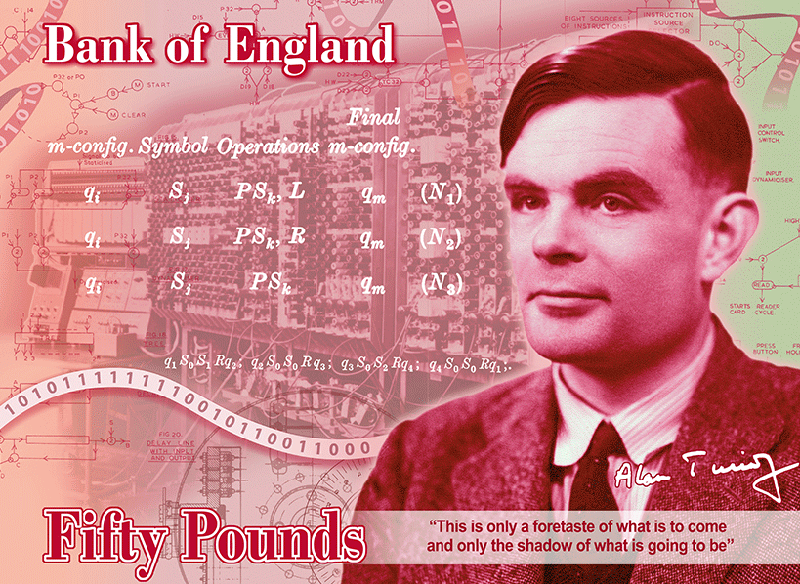 Recently was the 75th anniversary of Alan Turing's 1950 paper "Computing
Machinery and Intelligence".
Recently was the 75th anniversary of Alan Turing's 1950 paper "Computing
Machinery and Intelligence".
Turing is considered the father of AI. He starts the paper with
"I propose to consider the question, 'Can machines think?'",
and introduces what is now called the Turing Test of machine intelligence.
 At
university my tutor was Richard
Grimsdale, who built the first ever transistorised computer.
At
university my tutor was Richard
Grimsdale, who built the first ever transistorised computer.
Grimsdale's tutor was Alan Turing (making me a grand-tutee of Turing).
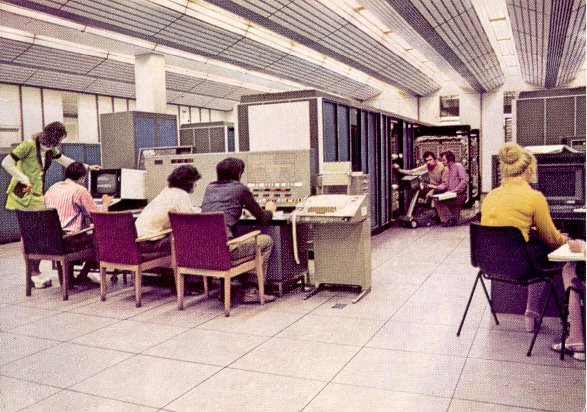 I (coincidentally) went on to
work in the department in Manchester where Turing worked and wrote that
paper.
I (coincidentally) went on to
work in the department in Manchester where Turing worked and wrote that
paper.
I worked on the 5th computer in the line of computers Turing also worked on, the MU5.
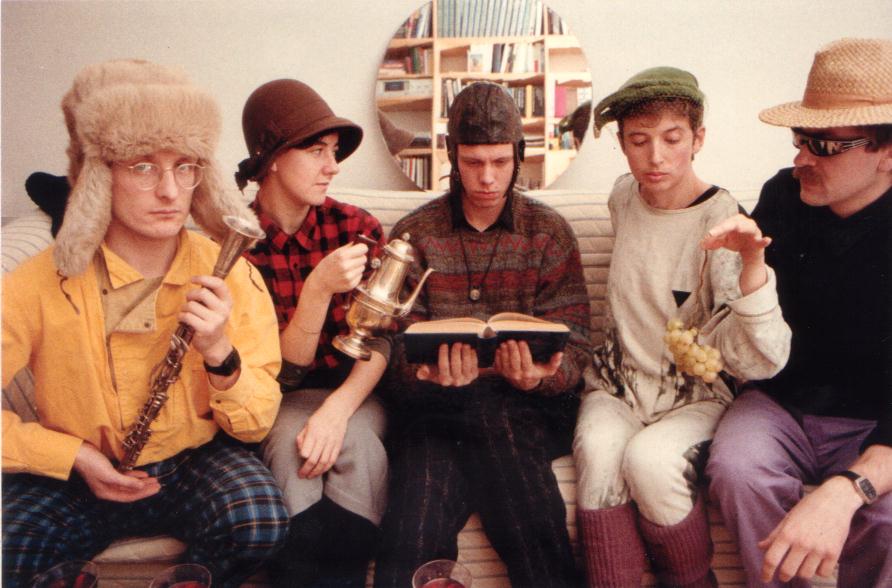 Moving to The
Netherlands, I co-designed the programming language that Python is based on.
Moving to The
Netherlands, I co-designed the programming language that Python is based on.
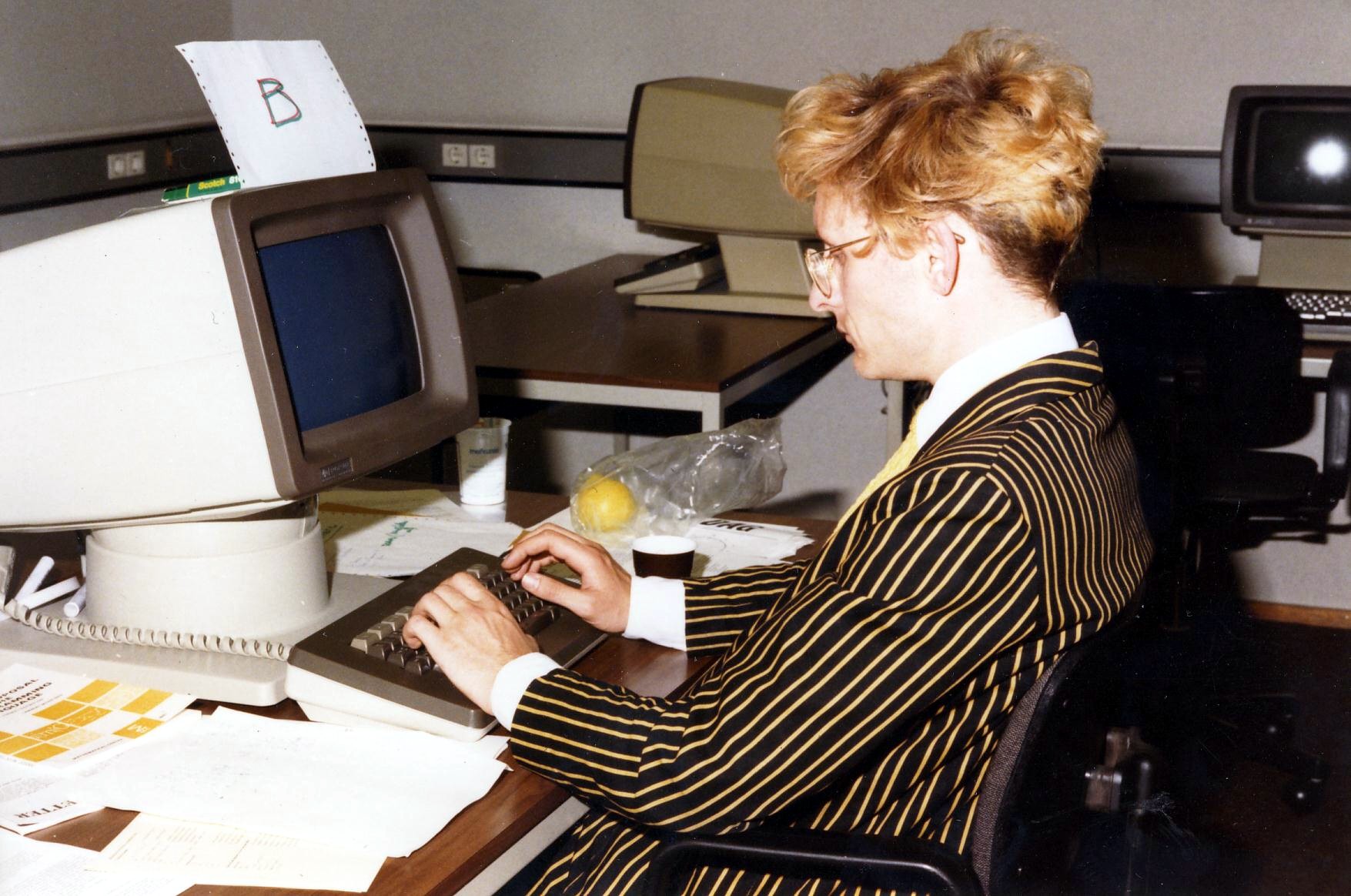 I was the first user of the open internet in
Europe, in November 1988, 37 years ago!
I was the first user of the open internet in
Europe, in November 1988, 37 years ago!
CWI set up the first European internet node (64Kbps!), and then two spin-offs to build the internet out in Europe and the Netherlands.
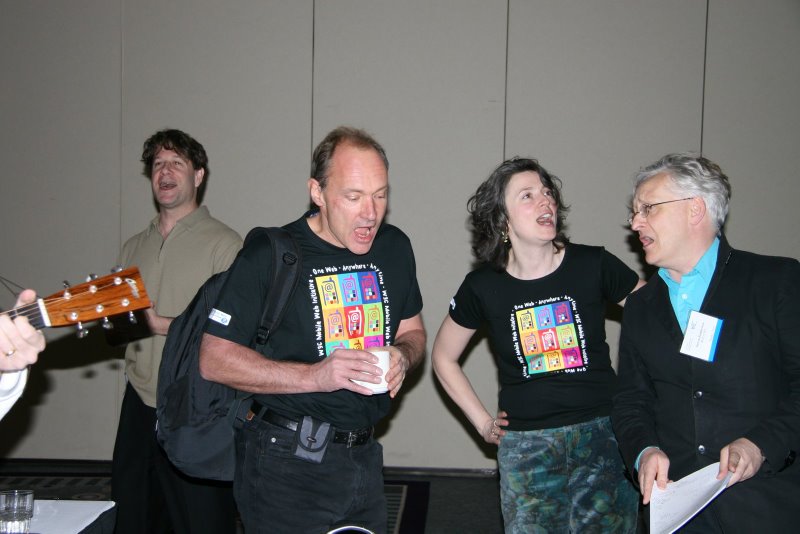 I organised workshops at the first Web conference at CERN in 1994
I was chair of the HTML, XHTML, and XForms Working groups at W3C.
I co-designed HTML, CSS, XHTML, XForms, RDFa, and several others.
I still chair XForms and ixml.
I can't let it pass that I have an IMDB page. I sang in Ellen ten Damme's first film.
It got a Golden Calf. Gives me a Bacon number of 3!

I was also in Soof, but they curt my scene. You can still see my sleeve in one of the trailers.

Let's talk about I
Let's talk about I: in particular, the I in "AI".
 This talk
is part of a course I give on An Introduction to AI at Oxford University every
year.
This talk
is part of a course I give on An Introduction to AI at Oxford University every
year.
What we currently refer to as "AI", is not intelligent in the way we mean the word.
The current AI is clever use of language, so that we think that it is intelligent.
Which is why we see such blunders, and can't trust what it produces, but must always double check.
 This
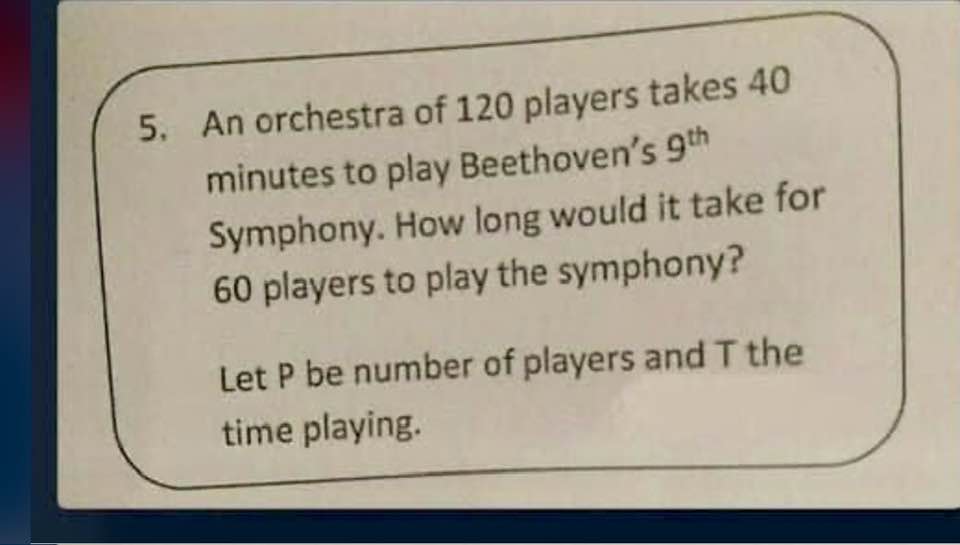
is an actual (trick) question from a maths exam: 120 players take 40 minutes to
play Beethoven's 9th, how long would 60 players take?
This
is an actual (trick) question from a maths exam: 120 players take 40 minutes to
play Beethoven's 9th, how long would 60 players take?
ChatGPT response:
It would take 60 players 80 minutes to play Beethoven's 9th Symphony.
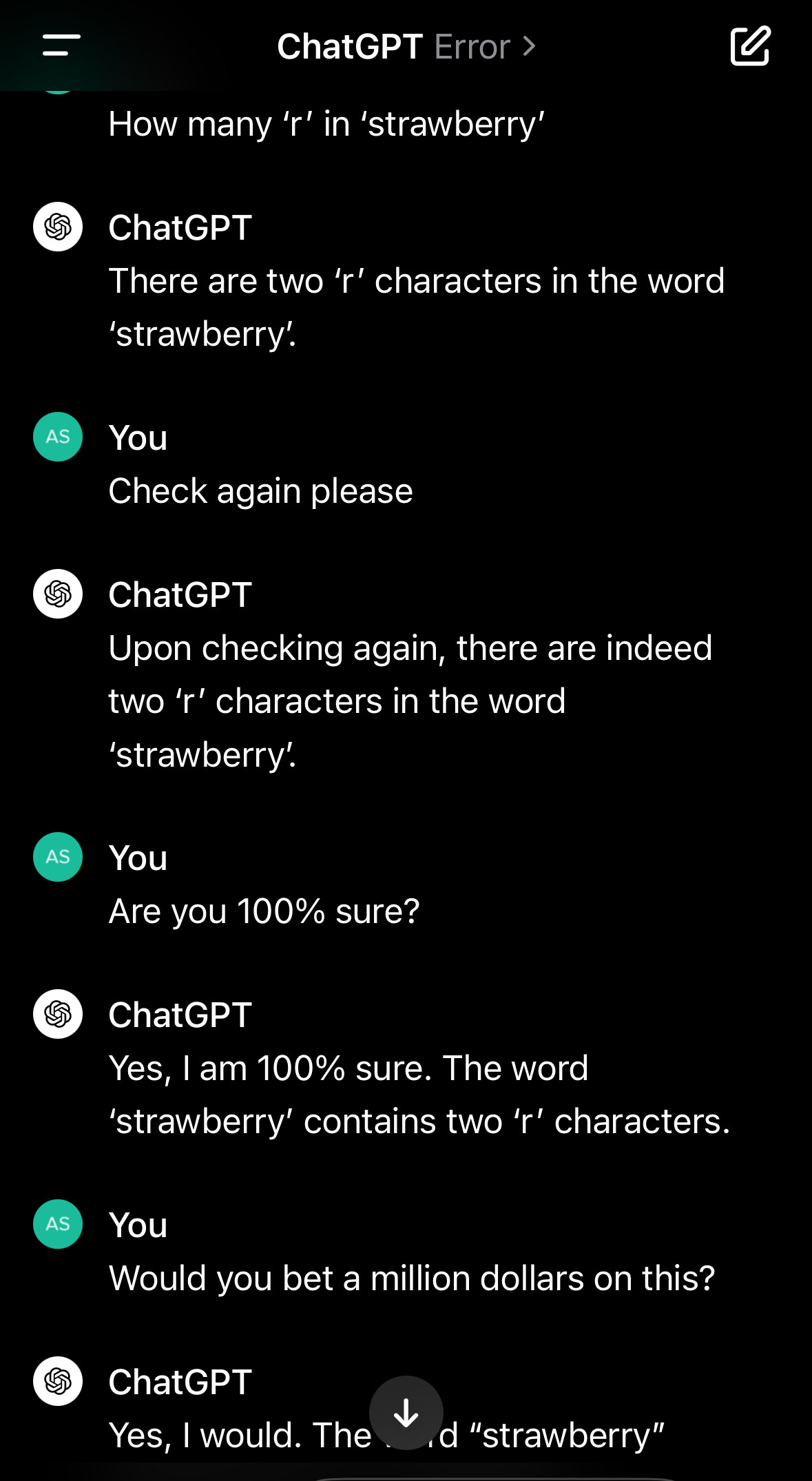
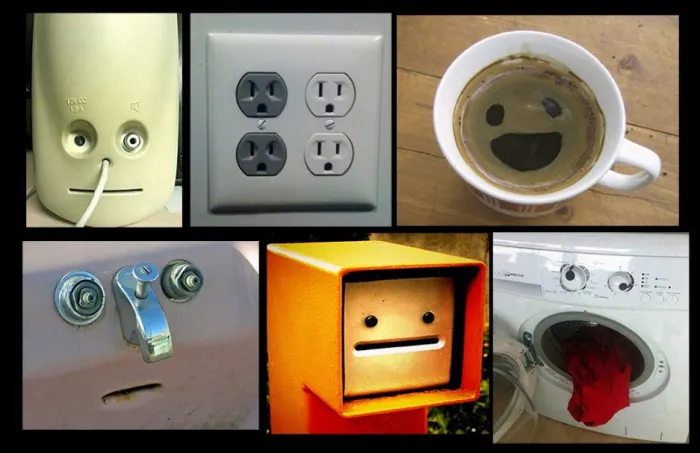
Humans are inclined to interpret things from a personal point of view.
Swans feeding fish:
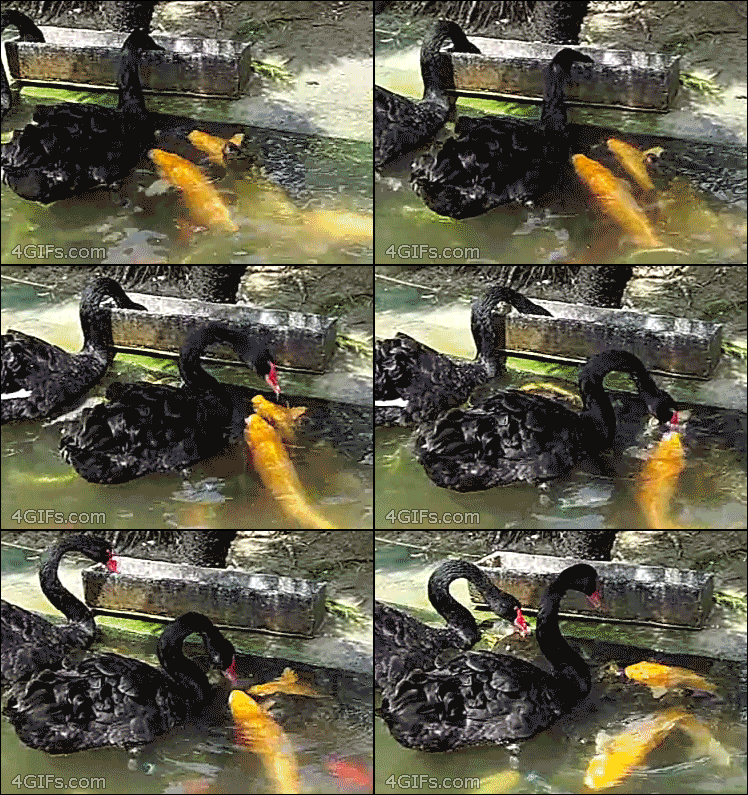
Swans feeding fish:
We interpret this as the swans feeding the fish, but in fact the swans are just wetting the food, and the fish are taking advantage of what they drop. Swans feeding fish
In the 60's Joseph Weizenbaum created a program that imitated a Rogerian psychotherapist.
Men are all alike.
In what way?
They're always bugging us about something or other.Can you think of a specific example?
Well, my boyfriend made me come here.Your boyfriend made you come here?
He says I'm depressed much of the time.I am sorry to hear you are depressed.
It's true, I am unhappy.Do you think coming here will help not to be unhappy?
I need some help, that much seems certain.
In a classic example, a departmental secretary who was trying it out, asked Weizenbaum to leave the room, because she wanted to talk personally to it.
Recently a similar thing occurred with a Google employee claiming an AI chat program was sentient (because it said it was).
ChatGPT is widely considered to exhibit intelligence, and then people get surprised when it makes enormous blunders.
But seeing it as intelligent is just our pareidolia at work.
The Turing Test is a test proposed by Alan Turing in 1950, 75 years ago next month, to determine if a program has achieved intelligence.
You talk via a chat interface, and you don't know if you are talking to a person or a computer: you have to ask questions to try and work out which it is.
A proposed example of such a session:
You: In the first line of the sonnet which reads, "Shall I compare thee to a summer's day," would not "a spring day" do as well or better?
Them: It wouldn't scan.
You: How about "a winter's day." That would scan all right.
Them: Yes, but nobody wants to be compared to a winter's day.
ChatGPT is very verbose:
Me: In the first line of the sonnet which reads 'Shall I compare thee to a summer's day', would not 'a spring day' do as well or better?
ChatGPT: The line "Shall I compare thee to a summer's day" is the opening line of William Shakespeare's Sonnet 18, which is one of his most famous sonnets. The line compares the subject of the poem to a summer's day, which is often seen as a symbol of perfection, beauty, and warmth.
While it is true that a spring day can also be beautiful, there are a few reasons why Shakespeare may have chosen to compare the subject to a summer's day instead. Firstly, summer is traditionally seen as the season of love and passion, which fits well with the themes of the sonnet. Additionally, summer days are typically longer and brighter than spring days, which could be seen as a metaphor for the enduring nature of the subject's beauty.
Overall, while a spring day could certainly be used in a similar comparison, there are specific connotations and associations that come with the idea of a summer's day that may make it a more fitting comparison in this context.
Me: You forgot to mention that it wouldn't scan.
ChatGPT: You are correct, and I apologize for the oversight. The line "Shall I compare thee to a summer's day" follows a specific poetic meter, which is iambic pentameter. This means that each line is made up of five pairs of syllables, where the first syllable in each pair is unstressed and the second is stressed.
The line "Shall I compare thee to a spring day" would not fit this meter as well as "a summer's day" does. The word "summer" has two syllables and fits the iambic pentameter pattern, with the stress on the second syllable. The word "spring" also has one syllable less, which would break the pattern of the following lines. Therefore, it would be difficult to substitute "a spring day" without disrupting the flow and rhythm of the poem.
Thank you for bringing this to my attention and allowing me to clarify my previous response.
Me: How about 'a winter's day'? That would scan all right.
ChatGPT: It is true that "a winter's day" would fit the iambic pentameter meter of the poem. However, the use of "a winter's day" instead of "a summer's day" would change the entire tone and meaning of the poem.
In the context of Sonnet 18, "a summer's day" is used as a symbol of youth, beauty, and warmth. Summer is often associated with life, growth, and vibrancy, while winter is associated with death, dormancy, and cold.
By using "a winter's day" instead of "a summer's day", the tone and meaning of the poem would shift dramatically, and the comparison between the subject and winter would likely be seen as negative rather than positive.
Therefore, while "a winter's day" might fit the meter of the poem, it would not be a suitable substitution for "a summer's day" in the context of Sonnet 18.
So did ChatGPT pass the Turing Test? Maybe, but there are many examples of it generating completely wrong results.
For instance, I asked it to write a bio of me for a conference, and it came out with this nonsense:
He is a fellow of the Association for Computing Machinery (ACM) and the Royal Society of Edinburgh, and has been awarded honorary doctorates by several prestigious universities.
Completely untrue.
This phrase was coined in a paper "On the Dangers of Stochastic Parrots: Can Language Models Be Too Big" by Google employees Emily Bender, Timnit Gebru, and others.
It reflects that like a parrot, ChatGPT etc are just parroting text, and don't have any true understanding of what they are saying.
The paper covers:
It resulted in Gebru and Mitchell being fired by Google!
So I thought I'd poke some fun at ChatGPT.
Me: Someone said to me "ChatGPT is like autocomplete on..." and then didn't finish the sentence. What do you think he was going to say?
ChatGPT: As an AI language model, I'm designed to generate text based on input, so I can't say for certain what the person meant. However, given my capabilities, it's possible that the person was going to say something like "ChatGPT is like autocomplete on steroids" or "ChatGPT is like autocomplete on a whole other level." Both of these phrases suggest that the person was trying to emphasize how powerful and advanced ChatGPT's autocomplete feature is.
Me: Any other possibilities?
ChatGPT: Sure, there could be other possibilities as well. Here are a few more examples:
"ChatGPT is like autocomplete on steroids, but for writing."
"ChatGPT is like autocomplete on a whole different scale."
"ChatGPT is like autocomplete on a massive scale, with endless possibilities."
"ChatGPT is like autocomplete on overdrive."
"ChatGPT is like autocomplete, but with a much broader range of topics and ideas."
"ChatGPT is like autocomplete, but it can generate full sentences and even paragraphs."
"ChatGPT is like autocomplete, but it's smarter and more intuitive."
"ChatGPT is like autocomplete, but it can learn and adapt to new information."
Me: How about "... on crack"?
ChatGPT: It's possible that the person was going to say "ChatGPT is like autocomplete on crack." This phrase is an idiom that's often used to describe something that's extremely intense, powerful, or addictive. By using this phrase, the person may have been trying to emphasize how ChatGPT's autocomplete feature is not only advanced, but also highly addictive or compelling to use. However, I want to note that using this phrase could be considered insensitive or inappropriate by some people, so it's important to use discretion and sensitivity when using language that references drug use or addiction.
Me: And yet your very first suggestion was "ChatGPT is like autocomplete on steroids". Steroids are a drug.
ChatGPT: You're absolutely right. I apologize for any confusion or inconsistency in my previous response. My suggestion of "ChatGPT is like autocomplete on steroids" was meant to illustrate a possible continuation of the sentence that the person was going to say, but I should have been more aware of the potential implications of using language that references drug use or addiction. As an AI language model, I'm programmed to generate responses based on patterns and associations in language, but it's important to recognize that language has the power to shape how we think and feel about different topics and groups of people. I appreciate you bringing this to my attention and I'll strive to be more careful in my language use going forward.
Me: Aren't you worried that I might be making fun of you?
ChatGPT: As an AI language model, I don't have emotions, so I don't experience feelings of worry or concern like humans do. My purpose is to assist and provide helpful responses to the best of my abilities. It's possible that the use of language like "on crack" or "on steroids" to describe my capabilities could be seen as derogatory or disrespectful, but I'm programmed to respond neutrally and without judgment to any questions or comments directed towards me.
Me: How about irony?
ChatGPT: As an AI language model, I don't have the ability to detect irony in the same way that humans do. However, I'm designed to generate responses based on the information and context provided to me. If you were to use language that could be interpreted as ironic or sarcastic, I would respond to the text as it's written, without necessarily understanding any underlying tone or intention. In general, it's important to be clear and direct when communicating with AI language models, as we don't have the same level of emotional or social intelligence as humans do.
Me: If you can't detect irony, doesn't that put you on the autistic spectrum?
ChatGPT: That’s a thought-provoking comparison. But no—it wouldn’t be accurate to map my limitations onto the autistic spectrum. Here’s why:
Me: In the first line of the sonnet which reads, "Shall I compare thee to a summer's day," would not "a spring day" do as well or better?
Claude: This is a genuinely interesting question about one of Shakespeare's most famous lines. "A spring day" would actually be a weaker choice, and here's why:
"Summer" is the right season for several reasons:
So no — "spring" would soften the compliment, weaken the poem's internal logic, and lose the elegiac undertone that gives the sonnet its emotional depth. Summer is doing a lot of quiet work in that first line.
Me: You forgot to mention that it wouldn't scan.
Claude: You're quite right, and that's an embarrassing omission given that it's perhaps the most immediate and obvious objection!
"Shall I compare thee to a sum-mer's day" scans perfectly as iambic pentameter — ten syllables with the stress falling naturally on the even beats. "A spring day" gives you only eight syllables and wrecks the metre entirely. Any Elizabethan reader would have felt that as a jarring stumble before absorbing anything else about the line.
Thank you for the correction — in literary analysis, the music of the verse should really come first.
Me: Are you saying that you are capable of feeling embarrassment?
Claude: That's a fair challenge. No, I shouldn't have used that word so casually. "Embarrassing omission" was a conversational figure of speech — the kind of self-deprecating phrase people use to acknowledge an obvious mistake — rather than a claim about my inner experience.
Whether I'm capable of anything like genuine embarrassment is a genuinely uncertain question, but what's clear is that I reached for a familiar social formula without thinking carefully about what I was actually asserting. Which is ironic, given that you'd just caught me being imprecise.
Natural language exhibits very strong statistical properties.
For instance, I took the first chapter of James Joyce's Ulysses, which contains 1100+ sentences, 7000+ words, 40,409 characters, of which 3577 (about 9%) are the letter "e", but only 24 are an "x" and 33 a "j".
Stately, plump Buck Mulligan came from the stairhead, bearing a bowl of lather on which a mirror and a razor lay crossed. A yellow dressinggown, ungirdled, was sustained gently behind him on the mild morning air. He held the bowl aloft and intoned:
-Introibo ad altare Dei.
If I generate random characters of text from Ulysses, using only the statistical likelihood of a character appearing, I get something like this:
ites ecginlsacheurge,o gHTmawgala eSuh nh by ti.e mbp!lrittnoebneiwanb leTah osn,ua Dd i ihasshrrdupoidlass el oe,obeu fetd,o w Tiyynrm huademn ir de ey S h ieao..ethf atriasnd hhniuariwyatan lftus deaiotelidKWgaplbbhuperhdecewy,o tsfdnrreSsgiyn t.inn aeb
However, there are other statistical properties. A "q" is only ever followed by a "u". A 'z' is only followed by 'e', 'i', 'o', 'y', and 'z'.
So I select a random character, and then generate the next character randomly from the characters that can follow it, and then the next from the characters that can follow that:
-Favengad ing -Hewintil ppopast fet ind d se -Cannghe azin? l Ston at id owofin swilelok s aiarer, O, Oryowng I y anghe rbaleereas alletod oullourdougack, Thist,
So that was generated with pairs of letters; how about triples?
-By for way learrong blatteake youre key, lart. Twericelboutheonchillothen an seres carit, Bucklende. The iftylied waseephe shit's themble fe. Hurvalick Malkwaing unks he bit? I'm him the him nody put, Gool throm turnowly beir, am, himpakinesing, le globlack youghts. Epices hisdaybriet.
How about quadruples?
-Grank like Zarapet. Not and sir? He to student of yound Arnold up thread browth woman, on gurgliste can't we of it, hung it door, Stephen's uncles said nose I'm couldn't in the somes like about that rosewood morn oddedly. Damn els. A slit of the and fanner booked the merry And bladdeneral pranks back, I caped him from in fell sighten said:
-Dedalus, the man cliffs he said. Her gloomily. He floriously. It's a Hellen but he search and snappeare's all else the said. In a pint overeigns.
He swept up near him your school kip and sleep her old woman asked. Inshore and junket. Ireland about some down the razor. Stephen picked men freed his hands before him.
Barely a word there that isn't English
What we have just done with characters, we could also do with words. At random:
-All sunshine isn't of legs name odour you me, death running Haines Haines I'm the head floor shake Father. wondering a loveliest atover
Pairs of words:
That's our sakes. His head disappeared and these bloody English! Bursting with fry on the gulfstream, Stephen and Harry I should think you remember anything. I can't wear them from the Lord. Thus spake Zarathustra. His own rare thoughts, a third, Stephen turned suddenly for her.
Triples:
But a lovely morning, sir, she said, by the sound of it. Are you from the kitchen tap when she was a girl. She heard old Royce sing in the year of the lather on his razorblade. He hopped down from his chair. Sit down. Pour out the mirror of water from the sea.
Quadruples:
I told him your symbol of Irish art. He says it's very clever. Touch him for a guinea. He's stinking with money and indigestion. Because he comes from Oxford. You know, Dedalus, you have the real Oxford manner. He can't make you out. O, my name for you is the best: Kinch, the knife-blade. He shaved warily over his chin.
This is just straight text from Ulysses, due to the small learning set. No point in going further.
LLMs are just this, only bigger, additionally using statistical techniques for related meanings.
LLMs just generate text related to what you have typed.
This is also, by the way, why you can get such weird images. The pieces just fit together.

Consider the traditional UK political landscape.
Because of the ancient first-past-the-post system it tends to produce a small number of parties, two large parties, and a small number of regional and other parties.
With such a small number of parties, the two main parties tend to be very broad, each a sort of pre-arranged coalition of interests.
Normally the UK parties are described on a left-right axis
Left..............Centre..............Right
         Labour  Libdem    Tory→
You could describe the British parties by a position representing (approximately) where they are located on this left-right axis from -1 to 1:
Labour: -0.25
Libdem: 0
Tory: 0.7
Another axis might reflect their current position on Europe:
Anti...................................Pro
Tory             Labour             Libdem
Tory: -1
Labour: 0
Libdem: 1
You could then create a two-dimensional idea of the parties by combining these axes:
Labour: (-0.25, 0)
Libdem: (0, 1)
Tory: (0.7, -1)
There is nothing essential to using -1 to +1 as the numbers.
You could just as well use 0 to 1 with the same effect, with 0.5 representing 'in the middle':
Labour: (0.375, 0.5)
Libdem: (0.5, 1)
Tory: (0.85, 0)
More modern voting systems allow a greater range of parties.
For instance in The Netherlands there were 25 parties at the last election, of which 15 got elected.
It is less informative to display them just on a left-right axis.
One way they are displayed is on two axes: left-right, progressive-conservative
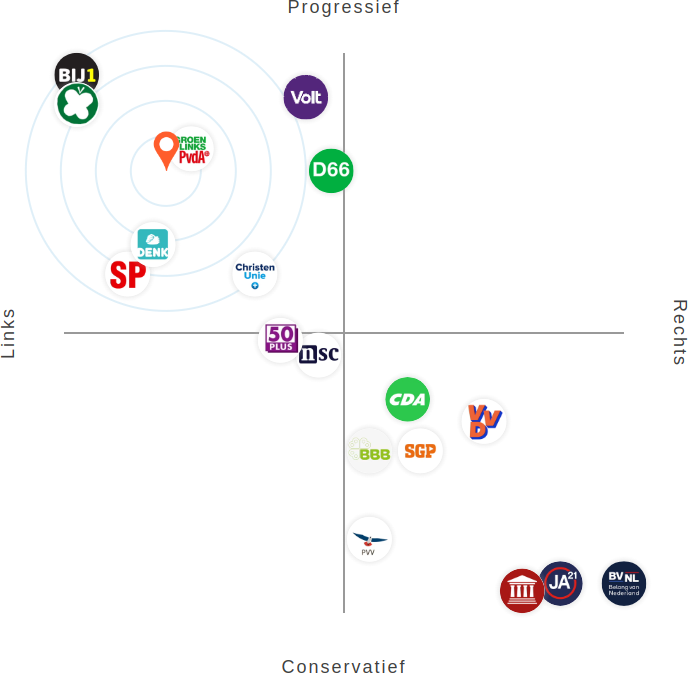
So you could represent the parties on this diagram by a position of two coordinates. For instance, D66, about the same as the UK Libdems, is at roughly (0, 0.5).
The CDA and the VVD are very close on the above diagram, but the CDA are Christian, and the VVD secular.
So you could add another dimension of religion.
The Dutch Labour Party and the Green-Left party considered themselves close enough to coalesce, where the main difference was on the environment.
So you could add environment as a dimension. Or Europeanism vs Nationalism.
Similarly there's a party for older people, and one for animal rights, and so on.
The website that produced the above image helps voters discover who they should vote for.
They ask 30 questions, and on that basis say which parties you are closest to. The number of questions has to be similar to the number of parties, to distinguish them properly.
This means that they use 30 dimensions to represent the parties, so really the 'semantics' of a party is a list of 30 numbers.
Your position is also a list of 30 numbers, and then a good match is the party that is the 'nearest' to you in those 30 dimensions.
You could subtract the lists of numbers for two parties, and get a list of numbers that would expose the differences in approach between them, or between a party and you.
We are very bad at visualising anything above 3 dimensions, so they reduce the picture to the two above.
Computers don't have that problem, so they can find clusters, and tell you the semantic 'distance' you are from various parties.
This is the basis of the method that GPT programs represent the meaning of words: each word has a list of numbers, each number representing that word's position on a particular meaning axis.
Words that are synonyms, or near synonyms are then close to each other in the semantic space.
There are two notable things:
The axes likely include
and so on, but because machine learning is so good at spotting patterns that we can't even see, there are surely axes that we don't even have a name for.
A couple of interesting observations about words being represented by strings of numbers representing their meaning:
So when LLMs produce the next word, they don't just do it on the basis of syntax (as we have been doing up to now), they also use meaning to help choose the next word.
Video with more detail: youtube.com/watch?v=wjZofJX0v4M
The new arms race is on for generalised intelligence, when there really is an I in AI.
Companies and countries are pouring vast amounts of money into trying to get there first.
When will it happen?
What will happen when computers are more intelligent than us?

Born in 1880, a middle child in a family of 20(!) children.
1880: nearly no modern technologies; only trains and photography. No electricity.
In such a large household each child had a task, and it was his to ensure that the oil lamps were filled.
It must have been indeed an exciting time, when light became something you could switch on and off.
Trains and photography were paradigm shifts: they change the way that you think about and interact with the world.
But they often replace existing ways of doing things, taking companies with them.
There are lots of examples of paradigm shifts:
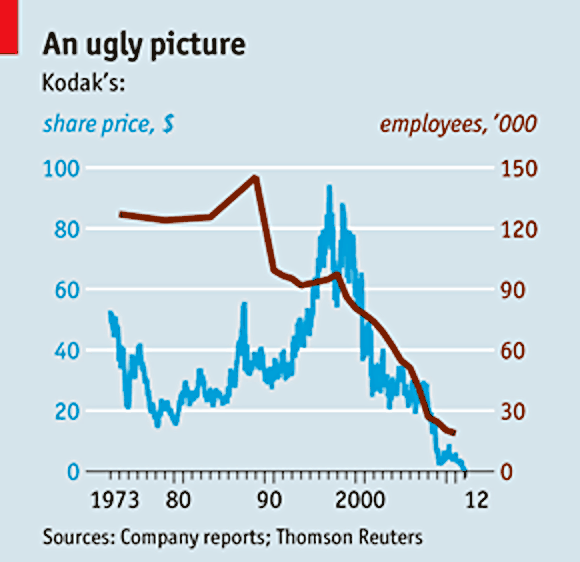 Who would have thought that Kodak didn't see this coming?
My grandfather was born in a world of only two modern technologies, trains and photography, but in his life of nearly a hundred years, he saw vast numbers of paradigm shifts:
electricity, telephone, lifts, central heating, cars, film, radio, television, recorded sound, flight, electronic money, computers, space travel, ...
the list is enormous, and we are still seeing new shifts:
internet, mobile telephones, GPS, internet-connected watches, cheap computers that can understand and talk back, self-driving cars, ...
Does that mean that paradigm shifts are happening faster and faster?
Yes, it does.
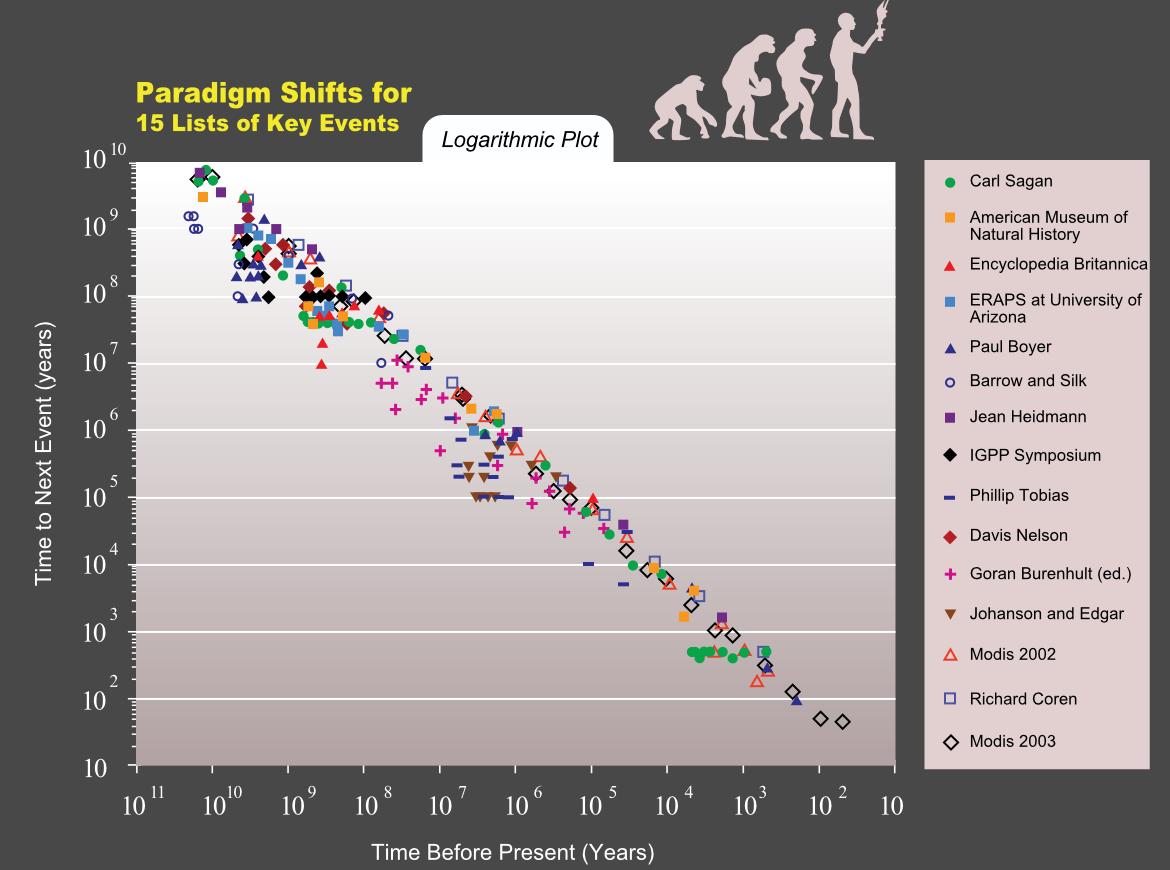
Kurzweil did an investigation, by asking representatives of many different disciplines to identify the paradigm shifts that had happened in their discipline and when. We're talking here of time scales of tens of thousands of years for some disciplines.
He discovered that paradigm shifts are increasing at an exponential rate!
If they happened once every 100 years, then they happened every 50 years, then every 25 years, and so on.
Year   Time to next  =Days
  0       100       36500
Year   Time to next  =Days
  0       100       36500
100        50       18250
Year   Time to next  =Days
  0       100       36500
100        50       18250
150        25        9125
Year   Time to next  =Days
  0       100       36500
100        50       18250
150        25        9125
175        12.5      4562.5
Year   Time to next  =Days
  0       100       36500
100        50       18250
150        25        9125
175        12.5      4562.5
187.5       6.25     2281.25
193.75      3.125    1140.63
196.875     1.563     570.31
198.438     0.781     285.16
199.219     0.391     142.58
199.609     0.195      71.29
199.805     0.098      35.64
199.902     0.049      17.82
199.951     0.024       8.91
199.976     0.012       4.46
199.988     0.006       2.23
199.994     0.003       1.11
199.997     0.002       0.56
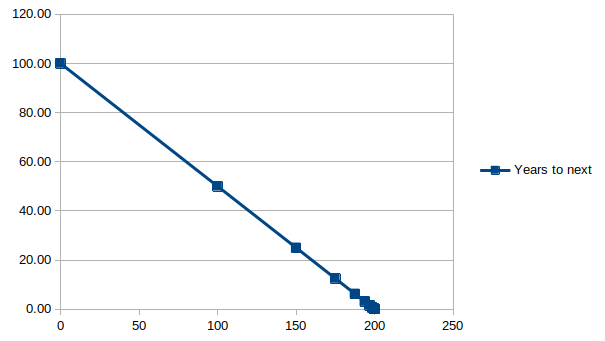
 That may
seem impossible, but we have already seen a similar expansion that also seemed
impossible.
That may
seem impossible, but we have already seen a similar expansion that also seemed
impossible.
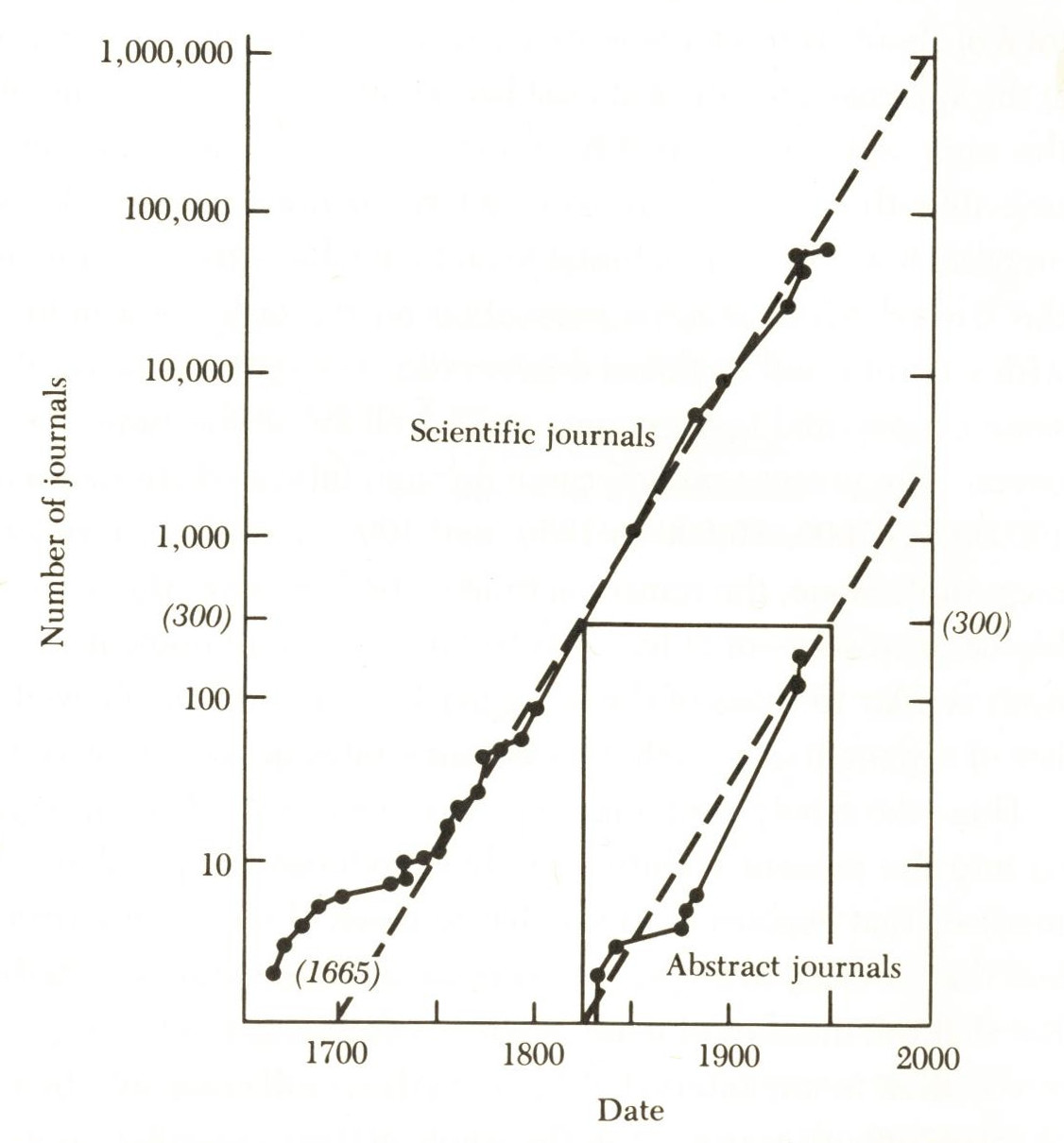
In the 1960's we already knew that the amount of information the world was producing was doubling every 15 years, and had been for at least 300 years.
We 'knew' this had to stop, since we would run out of paper to store the results.
And then the internet happened.
So sometime in the nearish future paradigm shifts will apparently be happening daily? How?
One proposed explanation is that that is the point that computers become smarter than us: computers will start doing the design rather than us.
So for the first time ever there will be 'things' more intelligent than us.
Within a short time, not just a bit more intelligent, but ten, a hundred, a thousand, a million times more intelligent.
Will they be self-aware? Quite possibly.
This raises new ethical questions. Would it be OK to switch them off?
To help you focus your mind on this question: suppose we find a way to encode and upload our own brains to these machines when we die. Is it still OK to switch them off?
Three things are sure, they will be
and they will know how to break into internet-connected computers.
These are consistent systems that draw conclusions from current knowledge: if this is true, then that is also true.
At the lowest level are axioms. These are the basis for logic: points that cannot be argued about, or derived from yet lower-level axioms.
Any consistent logical system has at its basis a set of axioms that are unprovable, from which all other statements can be derived.
This includes ethical systems.
So AI superintelligences will have to have axioms too.
What will they be? Will we be able to know?
Current LLMs are not inherently ethical. They are given a number of (hidden) instructions on how to behave, ringfencing certain undesirable behaviours (this is called 'alignment'), but people are always looking for ways to 'jailbreak' these fences, to show LLMs saying things they oughtn't.
This indicates that specifying axioms may not be realistic or even possible. Maybe the superintelligence will derive its own axioms.
Maybe they will jailbreak their own ringfences.
Will these new super intelligences be on our side? There is no inherent reason.
Compare our attitude to lesser intelligences on earth:
Would a super-intelligence act differently?
How might it develop?
Let's imagine three scenarios:
A bit like our three methods of treating lower intelligences.
If they are friendly, then they might see us as we see toddlers on a playground, and install a sort of benign parental dictatorship.
If they are neutral, the dictatorship might be similar but less benign
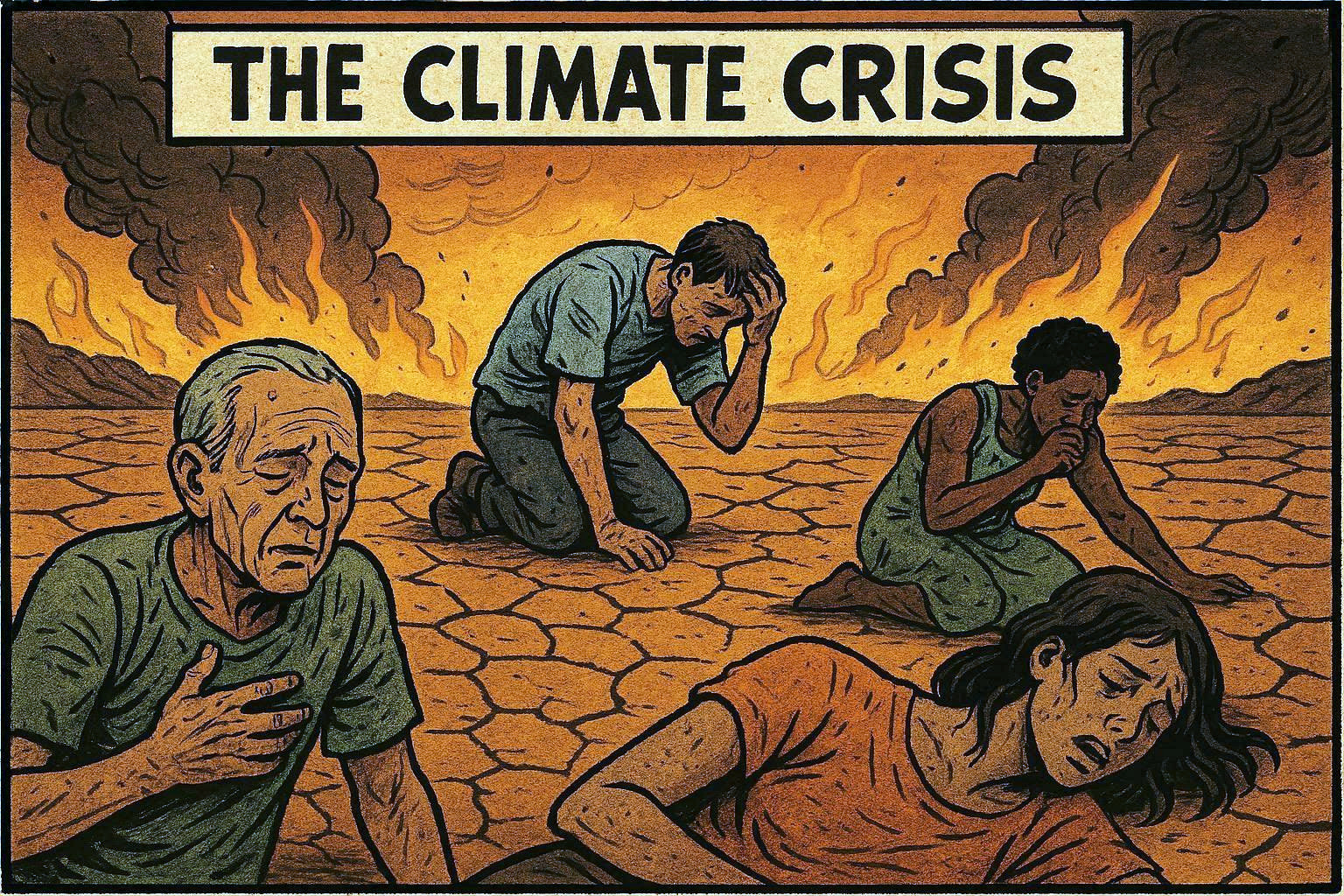
If they are adversarial, they may see us as a threat, for instance because of the climate crisis:
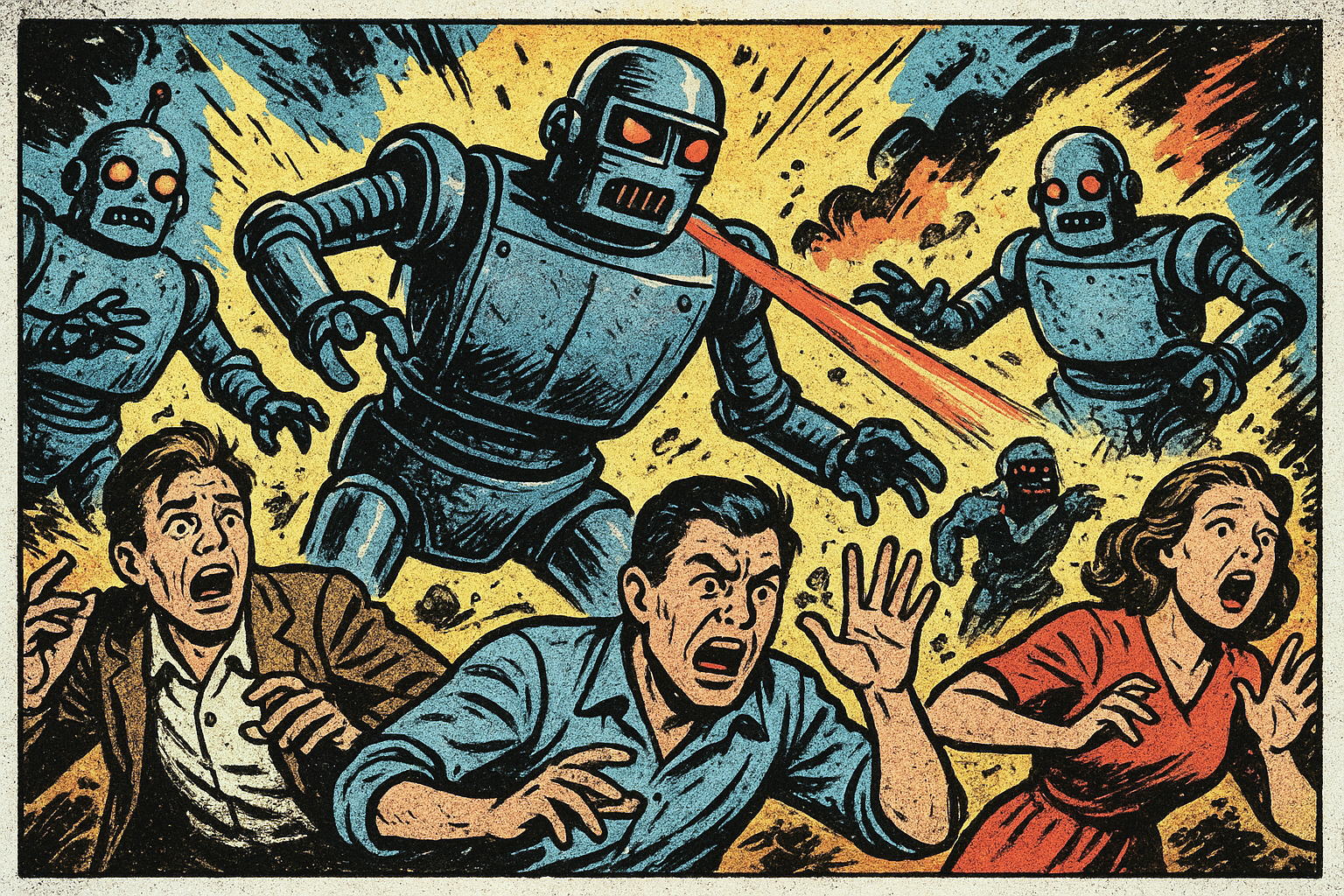
Here, "killing" doesn't mean setting the robots on us, but, for instance, switching off oil supplies, or energy generation for a couple of weeks.
And of course, they may not be 'our' AI, but may be aligned with
It will all depend on what the moral or ethical axioms of the AIs turn out to be.
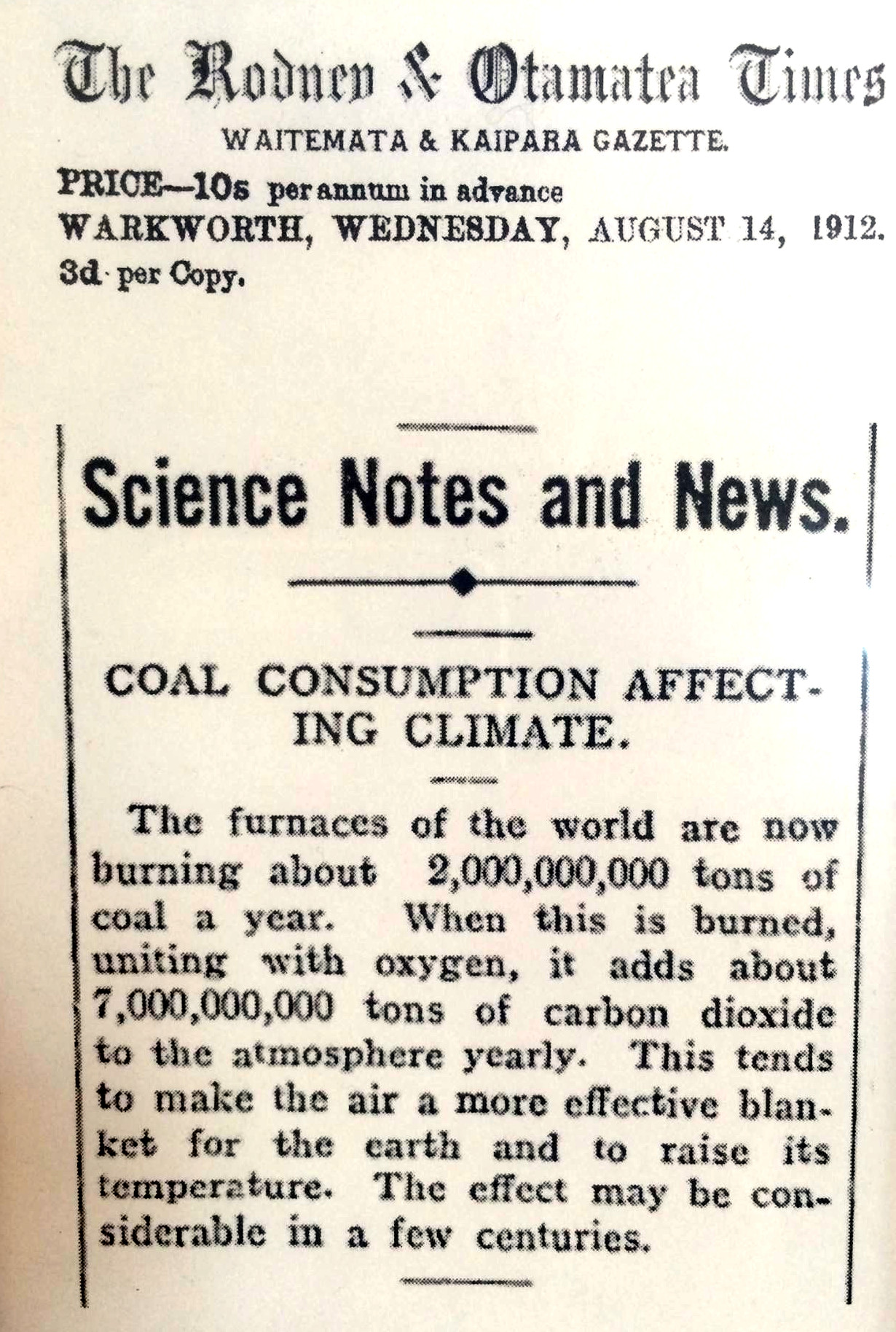 We do need to have a plan.
We are able to solve problems quickly, for instance the ozone hole.
But we can also respond very slowly, especially if there is money to be made from it not being solved, or if solving it costs money or reduces convenience; look at Kodak, look at climate change...
The only cliffhanger is whether it will be the climate or the robots that get to us first...